
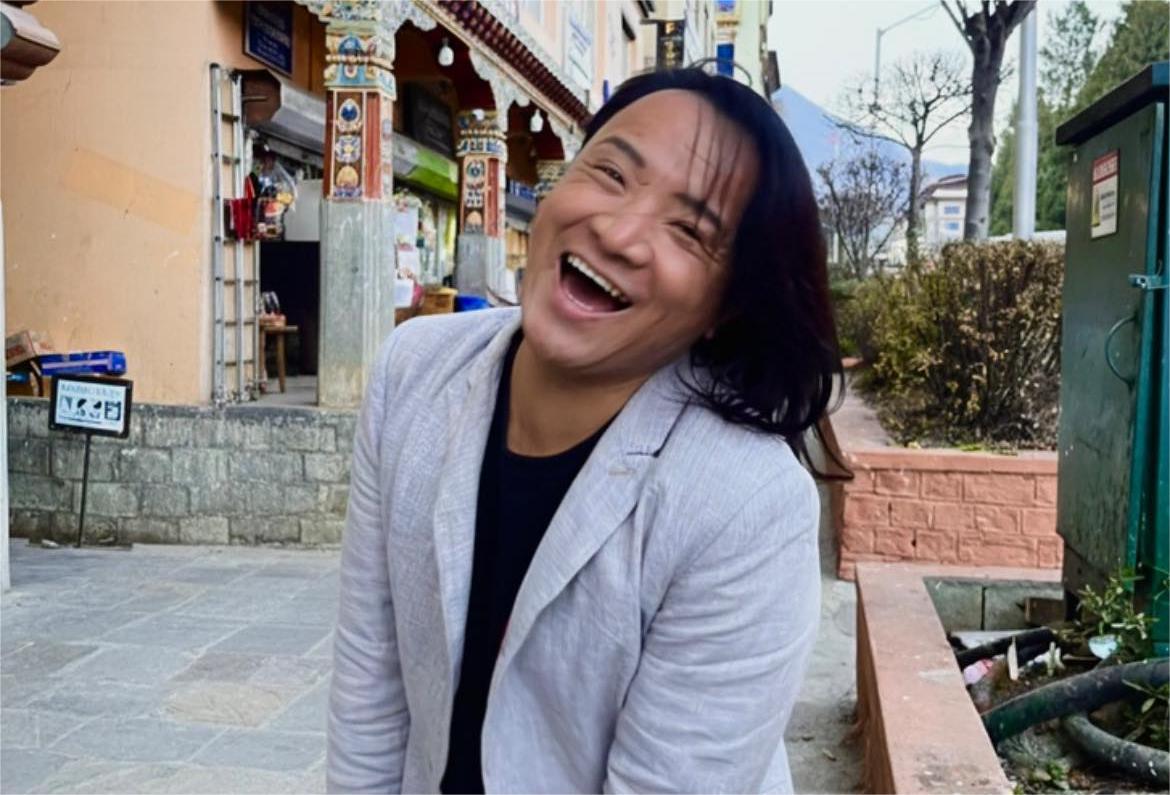
“I grew up in remote Drujaygang as a feminine boy. All my friends were girls, and people never let me forget how different I was. I was mocked, laughed at, and sometimes even beaten up by other boys. There were four of us siblings, and after my apa passed away, my mother carried the weight of raising us alone. Life was already hard, and being “different” made it harder.
When I went to boarding school, the bullying only intensified. I started acting “like a man” just so I could get through the day without being targeted. It was not who I was, but it helped me stay invisible. Coming to Thimphu for high school felt unreal. It was as if the stars and the moon were closer here. Compared to village life, the city felt like heaven. I studied at Rinchen High School, but even in Thimphu, the teasing did not stop. The fear of being bullied stayed with me, and it made focusing on my studies almost impossible.
After school, I could not go to college. I took up a clerical job at the Thromde. Singing was my escape. Back then, we did not have phones or messaging apps, so we called live radio shows, sang songs, and left messages for our families. One day, a girl fell in love with my voice. She reached out and proposed marriage. I was shocked. I told her clearly that I was not into women. She still insisted, saying marriage was not about gender identity. Eventually, we got married and had two children.
I loved my family deeply and worked hard to give them a good life. But my salary was not enough. So I quit my job and left for the Middle East, working as a chef and sending money home. It was not an easy place to be LGBTQ+, but there I found something precious. I found a community of queer people from all over the world. My friendly nature helped me make friends easily, and for the first time, I began accepting myself.
When I returned to Bhutan, my marriage was falling apart, and I learned to accept that too. After seven years abroad, I came home for good. I became active on TikTok Lives, and as my audience grew, so did the hate. The comments hurt, but I chose to respond with education and compassion.
When Aum Penjor was released, I saw a shift. People began talking. Compassion slowly entered the conversation around trans lives. I opened a small restaurant in the heart of Thimphu, and it became a safe space. It was a place not just for LGBTQ+ people, but for everyone to meet, eat, and become friends.
People know me as someone who is always laughing, joking, and making others smile. Maybe that joy comes from a life filled with bullying, abuse, and years of identity crisis. I choose happiness because I know what it is like to live without it.
Recently, I met a woman who beat her child for identifying as a woman. Her child became depressed and suicidal. I spent a long time talking to her, asking her to choose compassion over fear. In the end, she agreed to change and to love her child. Moments like that remind me why my story matters.”
Written by Dechen Wangdi